
A shop staffer’s recommendation was a discovery mechanism with no algorithmic equivalent.
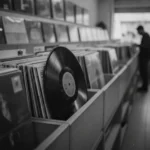
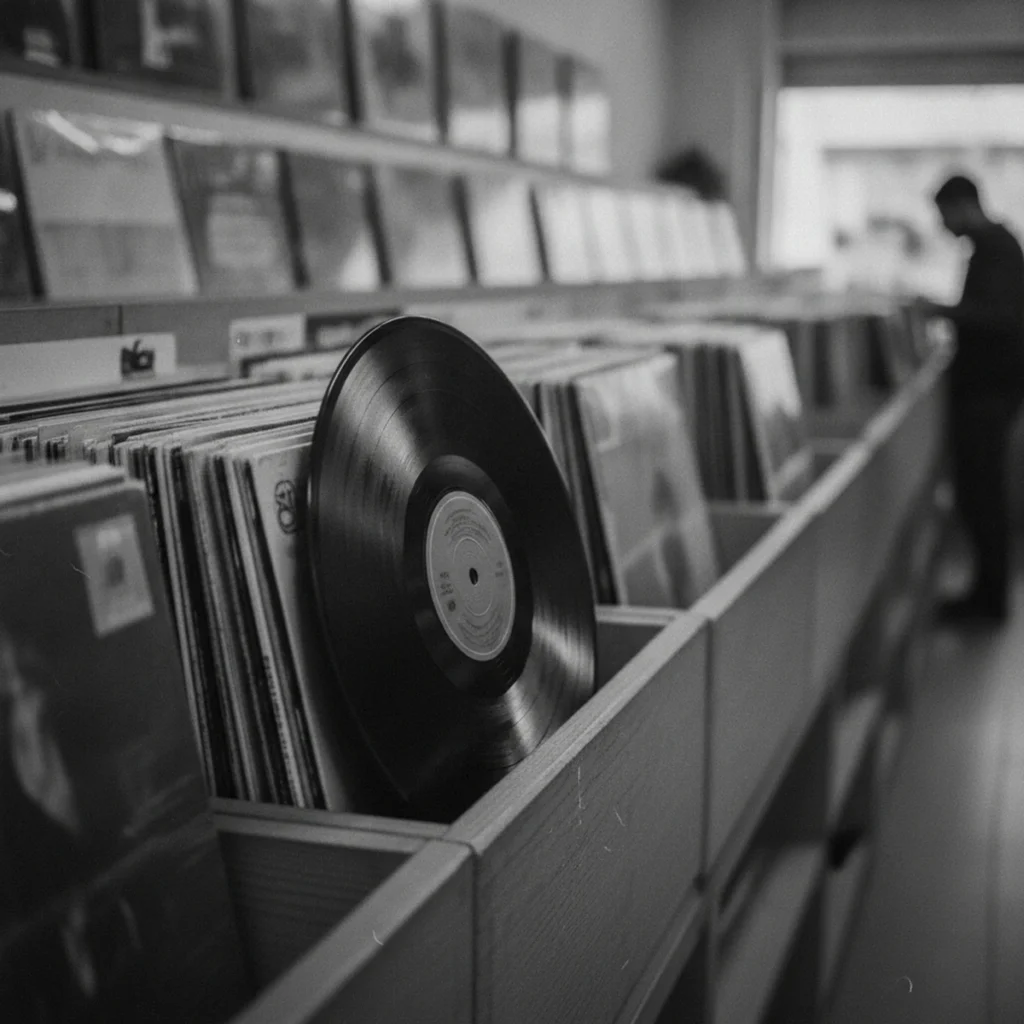
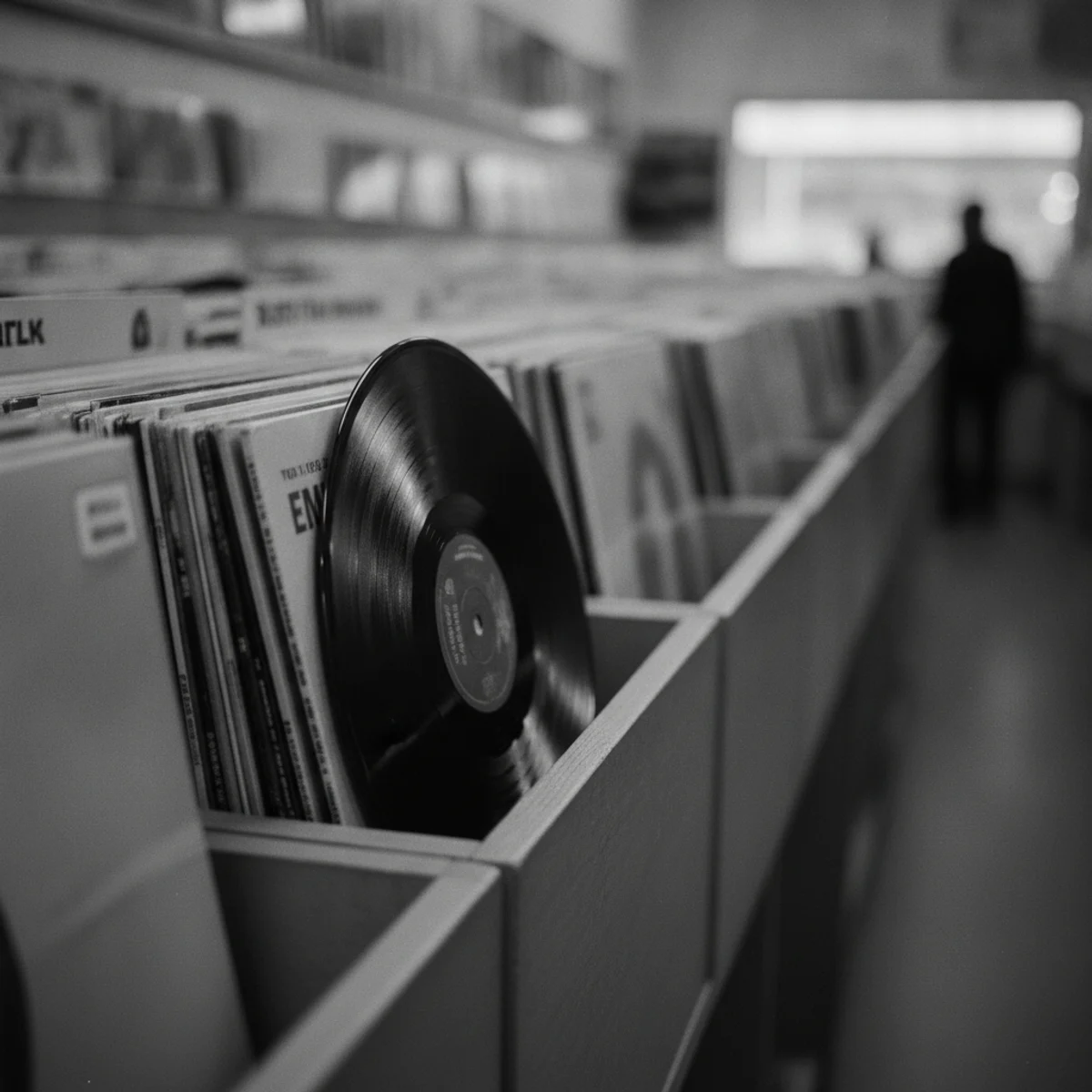
Independent record shops used to function as a filter as much as a retailer, and the part that has proved hardest to replace is the person behind the counter.
You can listen to our full playlist which contains the artist’s music, and know more about the artist’s work by scrolling down the page.

PLAYLIST
The Shop Was a Filter, Not Just a Retailer
Independent record shops performed two distinct functions, and only one of them was selling records. The other was deciding what was worth stocking at all, which made them a filter operating in advance of any customer’s attention.
That filtering was substantive. Limited shelf space meant every record in the racks had displaced another, and the staff making those decisions were generally people with deep and specific knowledge of the music they sold.
A customer browsing was therefore not looking at everything available. They were looking at a selection already refined by someone whose judgement they had chosen to trust by walking through that particular door.
Recommendation Carried Accountability
The mechanism that has proved hardest to replace is the staff recommendation, and its distinguishing feature was accountability rather than accuracy.
A person who recommended a record was present, identifiable and going to be there next week. If the record was disappointing, the customer would say so, and the relationship carried a cost. That gave the recommendation weight.
Algorithmic recommendation has no equivalent. It cannot be wrong in a way that matters to it, it does not remember the exchange, and it has no reputation with the listener that a poor suggestion would damage.
Shop staff also functioned as a distribution filter in the other direction. A local band could leave records on consignment, and a staffer who liked them would put them in customers’ hands, which was frequently a band’s first route to an audience.

Listening Posts Solved a Specific Problem
The listening post addressed the central difficulty of buying unfamiliar music: paying for something you have not heard. Being able to listen before committing removed most of the risk from experimentation.
That mattered more than it might appear, because the price of a record was a meaningful sum and a bad purchase was not easily reversed. Reducing that risk directly increased how adventurous people were prepared to be.
Streaming has solved this problem far more completely, since the risk of trying something is now zero. What it has not preserved is the curation attached to the listening post, where the selection available to sample had already been chosen by someone.
Physical Proximity Created Scenes
Beyond commerce, shops functioned as places where people who cared about the same music encountered each other in person, repeatedly and without arranging it.
That produced bands, labels, fanzines and promoters, because forming any of those requires finding collaborators, and the shop was where the relevant people could reliably be found. A great many independent labels began as conversations across a counter.
Online communities perform some of this, but they organise around interest rather than geography. A shop connected people who shared taste and lived in the same city, which is the specific combination required to start something that meets in a room.
In-store performances still work because they collapse discovery and purchase into one moment. Someone who has just watched a band play twenty minutes is standing next to the record, and conversion at that point is far higher than any online equivalent.

What Actually Replaced It
The replacement has not been a single institution but a distribution of the functions across several places, each doing part of the job.
Playlist curation handles filtering, at greater scale and with far less accountability. Social platforms handle community, organised by interest rather than location. Direct-to-fan platforms handle the commercial relationship, often with better economics for artists than retail ever offered.
Each of these is more efficient than the shop at its particular function. None of them recreates the combination, and the combination was what made the shop generative rather than merely useful.
Where Shops Still Work
The shops that have survived have generally done so by leaning into what cannot be replicated rather than competing on price or range, both of which they will lose.
That means in-store performances, listening events, a stocked selection that reflects genuine expertise, and staff who are present enough to build relationships with regular customers. Several have added a bar or a café, which turns browsing into staying.
It is a smaller business than it was and it is a different one. But it retains the thing that mattered, which was never the transaction. It was a physical place where someone whose opinion you trusted told you what to listen to next.
The economics that killed most shops were rent and margin rather than streaming alone. Where a shop owns its premises or pays low rent, the model still works, which is why survival correlates with property more than with taste.




About The Author