
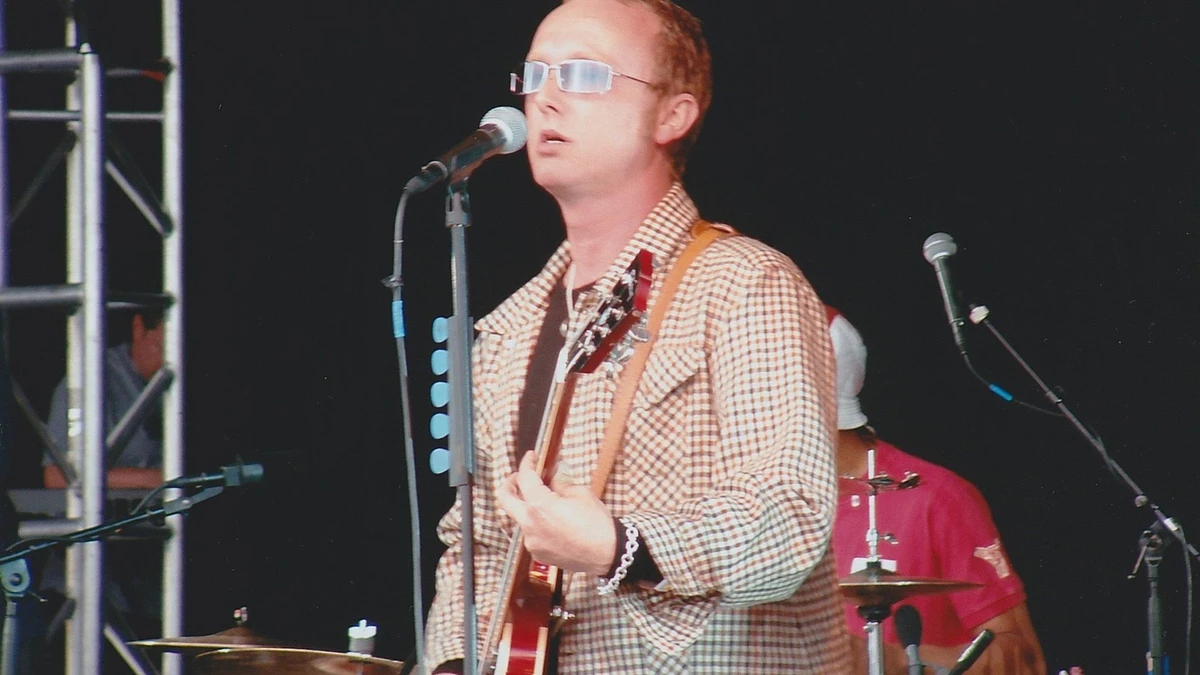
Ocean Colour Scene performing at Guilfest.
Ocean Colour Scene performing at Guilfest.
Ocean Colour Scene are playing thirteen arena dates this winter for a record that came out in 1996.
It opens in Glasgow in November and finishes at home in Birmingham in December.
Arenas Rather Than Theatres
The venue choice is the significant part of the announcement, because it is a considerably larger commitment than most bands of this vintage make.
Thirteen dates in rooms of that size means selling somewhere in the region of a hundred thousand tickets, which is not a nostalgia circuit number.
Arenas also require a production that fills them. A four-piece playing a 1996 album needs a screen, a lighting rig and a stage design, none of which a theatre show would demand.
Booking them is therefore a statement of confidence rather than a routine anniversary run, and it is the sort of decision a promoter has to be talked into or has run the numbers on.
Playing One Album Front to Back
The full-album format is now a fixture of the touring calendar, and it works on an implicit contract.
The audience knows exactly what it is getting, including the order, which removes every risk from the purchase. Nobody buys a ticket hoping the band plays the song they want.
The cost falls on the band, who lose the ability to shape an evening and are performing a sequence decided thirty years ago by whoever mastered the record.
The Opposite Choice, Same Era
It is worth noting that another band from exactly this period recently announced a run and made a point of saying it would not be built around one album.
Both approaches are defensible and they suit different situations. A band with one enormous record has an obvious asset to sell; a band with a spread of hits across several albums has more to lose by narrowing.
What determines the choice is usually the shape of the catalogue rather than any principle about nostalgia.
Ninety-Two Weeks on the Chart
The album spent 92 weeks on the UK chart, which is close to two years.
That statistic describes a completely different market from the current one. Records in the 1990s sold steadily over long periods, driven by radio, television and word of mouth, and a chart run of that length was a slow accumulation rather than a spike.
Albums now enter high and fall away within weeks, because the entire audience that intends to buy does so immediately. Nothing charts for 92 weeks any more, and nothing is set up to.
Four Singles From One Record
The album produced four hit singles, which is the actual engine behind the sales figure.
A four-single campaign keeps a record on radio for well over a year, and each release brings a new group of listeners to an album that is already out.
That was the standard commercial architecture of the era and it required something specific from the songwriting: four songs on one record that could each stand alone on daytime radio.
Writing Songs That Radio Would Play
The craft involved is pop craft, whatever the guitars suggest.
A radio single needs an identifiable introduction, a chorus inside the first minute, and a melody that survives being heard through a car speaker at low volume.
The album’s best-known song is built on an instantly recognisable riff for exactly this reason: a listener needs to know what the record is within three seconds, which is roughly how long a programme director gives it.
A Second Album That Changed Everything
This was the band’s second record, and the first had not done anything comparable.
Second albums that transform a career are rarer than the mythology suggests, since most bands who fail with a debut are dropped before they get the chance.
What generally makes the difference is a change of context rather than a sudden improvement in the songwriting, and in this case the context was a British guitar scene that had become the mainstream in the intervening years.
Being in the Right Country at the Right Time
The album arrived at the peak of a British movement that briefly made guitar bands the centre of national attention.
Scenes of that kind lift every band inside them, including several who would otherwise have remained regional, and the effect is not a criticism of the music so much as a description of how audiences form.
The corresponding penalty arrives when the scene ends, and it lands hardest on the bands who were most associated with it.
A Hundred and Twenty-Five Thousand People
In the summer of 1996 the band were invited to support the biggest British group of the moment at an outdoor concert in front of a crowd of 125,000.
Slots of that size are career-defining and largely unrepeatable. An audience that large is not there for the support act, but a substantial number of them leave knowing the songs.
It is also the single clearest marker of where this band sat in that summer, which is a useful thing to be able to point at thirty years later.
Coming From Birmingham
The band are from Birmingham, and the tour is routed to finish there.
Ending a run at home rather than in London is a deliberate sequencing choice, and it is the better one for a band with a strong regional identity.
A final night in a home city produces the show everybody remembers, which is why bands who can fill the room increasingly close there rather than open.
Why Anniversary Tours Keep Getting Bigger
The scale of this run reflects a broader shift in where live music money now comes from.
Recorded music pays a fraction of what it did, so touring is no longer promotion for a record but the primary business, and a catalogue with proven demand is the most reliable product a band of this age has.
Anniversaries provide the one thing a heritage act otherwise lacks, which is a reason for the show to be happening this year rather than any other. Without one, a tour is just another date on a calendar an audience can skip.
That is why the format has escalated from theatres to arenas over the last decade, and it will keep escalating for as long as the audiences that bought these records in their twenties keep turning up in their fifties.
What a Thirty-Year-Old Album Sounds Like Now
A record made in 1996 carries production decisions that are audible as period markers, and how a band handles that live is the interesting part.
The options are to reproduce the record exactly, which is what most of the audience thinks it wants, or to play the songs as the band plays them now, after three decades of performing them.
Faithful reproduction is safer and slightly deadening, since a live show that sounds exactly like the CD raises the question of why anybody left the house. The alternative risks disappointing people who came specifically for a memory.
What tends to happen in practice is a compromise: the arrangements stay recognisable and the tempos, keys and endings quietly drift, which is the version most audiences enjoy without noticing why.
What Is Actually Being Tested
Two things. Whether an album from 1996 can fill thirteen arenas, which is a genuinely large bet on how much of that audience is still buying tickets.
And whether a band that commits to playing one record in full has anywhere left to go the following year.
Thirteen arenas, thirty years, ninety-two weeks on the chart, and a final night at home.
About The Author