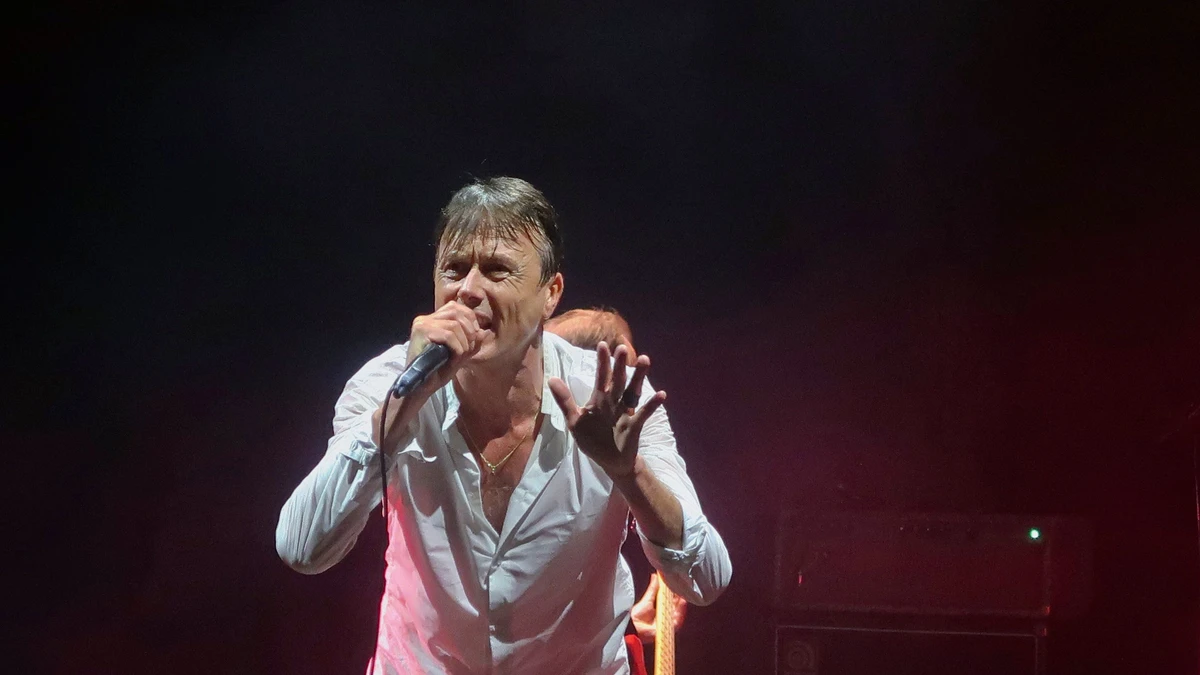
Suede now throw away five out of every six songs they write. “When you start off, everything you write (you think): ‘This is great, it’s going on the record,'” bassist Mat Osman told the Press Association. “Nowadays, five out of six things we listen to, we go: ‘Oh yeah, it’s great, but we’ve done it before.'”
The songs that survived that cut became Antidepressants, the band’s tenth album. It is now on the shortlist for the 2026 Mercury Prize, 33 years after Suede won the prize with their self-titled debut. The winner is announced on 22 October in Newcastle.
Three Nominations, Three Turning Points
Suede’s record with the Mercury Prize tracks the band’s own history closely. Their 1993 debut won, and the PA’s report on the nomination notes that it helped launch the mainstream revival of British guitar music that became known as Britpop, carried by singles such as “So Young”, “Animal Nitrate”, “The Drowners” and “Metal Mickey”.
They were nominated again in 1997 for Coming Up, the glam-pop record that held “Beautiful Ones”, “Trash” and “Saturday Night”. Antidepressants is the third nomination.
Osman sees a pattern in the timing. “It’s great, the thing is, our three nominations have come up at really big times for the band,” he said. “The debut, the comeback record (1996’s Coming Up) and now this new incarnation of the band, and just to be recognised, that we’re still doing it, and still doing really well is lovely, it’s great.”
What Antidepressants Is Built From
Antidepressants was released in September 2025 through BMG. According to The Daily Music Report, it was the band’s first new music since 2022’s Autofiction, their highest-charting record in more than 20 years.
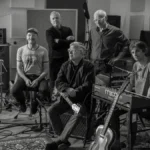
This time the method was the constraint. The sessions were recorded live with Ed Buller, the producer who first worked with Suede in 1992 on their debut single “The Drowners”, moving between ICP Studios in Belgium, RAK and Sleeper Sounds in London, and RMV in Sweden. The same report describes the album as an attempt to distil the band’s stage presence into a studio record, written after years of playing to the largest audiences of their career in more than 14 countries.
Brett Anderson framed the album against its predecessor. “If Autofiction was our punk record, Antidepressants is our post-punk record,” he said. “It’s about the tensions of modern life, the paranoia, the anxiety, the neurosis. We are all striving for connection in a disconnected world.”
The lead single, “Disintegrate”, premiered on Steve Lamacq’s BBC 6 Music show with a black-and-white video by Chris Turner. DIY’s review counted eleven tracks, heard Joy Division in the opener’s agitation and singled out “Broken Music for Broken People” as the centrepiece. The album’s working title came from that song.
The record’s theme of connection came partly from a show. Anderson told DIY that the phrase behind the single “Dancing With The Europeans” arrived after a gig in Spain during the writing period, when he was “going through a bad time and at a low, personally”. “But we played this brilliant gig. There was a great connection between me and the audience,” he said. “The phrase summed up the experience of looking for connection in a disconnected world.”
The Discipline Behind the Songs
The five-sixths rule is the most revealing thing the band have said about the record. “We throw away five-sixths of everything we write nowadays, and it never used to be that way,” Osman told the PA. Early in a career, he explained, everything feels like it belongs on the album. Thirty years on, the test is whether a song repeats something Suede have already done.
Multi-instrumentalist Neil Codling described the work itself in plainer terms. “The thing that keeps us going is the day-to-day work, which is sitting down and trying to come up with songs out of nowhere,” he said. “That’s the thing that drives us because we’re kind of fascinated and obsessed by pop music and rock music.”
Read together, the two quotes describe a band that writes constantly and keeps very little. On the debut, by Osman’s account, nearly everything went on the record. On Antidepressants, the judges were hearing the one song in six that survived the cut.
How Critics Heard the Record
DIY’s verdict was measured. It called Antidepressants “a solid, pleasantly dense record from a band who’ve been solid for decades yet”, while noting that it did not quite match the “experimental” description Anderson had offered early in its making.
The review was specific about where the album lands. “June Rain” was “pure, instant nostalgia for a time not yet lived”, “Somewhere Between An Atom And A Star” was “overly melodramatic” and “begs to be epic”, and “Trance State” namechecks the antidepressant Mirtazapine. It had reservations too: on “Criminal Ways” and “Dancing With The Europeans”, it said, the lyrical repetition sometimes tipped into overdone rather than emphasis.
The Field Suede Are Up Against
The 2026 shortlist is wide. NME published the full list: Dave’s The Boy Who Played the Harp, Dove Ellis’s Blizzard, Florence + The Machine’s Everybody Scream, JADE’s THAT’S SHOWBIZ BABY!, Knats’ A Great Day in Newcastle, Kojey Radical’s Don’t Look Down, Nia Archives’ Emotional Junglist, Olivia Dean’s The Art of Loving, Paul McCartney’s The Boys of Dungeon Lane, RAYE’s THIS MUSIC MAY CONTAIN HOPE., Suede’s Antidepressants and the War Child compilation HELP(2).
Several entries carry history of their own. Paul McCartney has been nominated for the first time in his career, Dave won in 2019, Florence + The Machine are on their fourth nomination and Olivia Dean on her second. The eligibility window ran from 30 August 2025 to 17 July 2026, which is why some recent releases will have to wait for next year.
The list also left out records many expected to see. NME named Lily Allen’s West End Girl, Blood Orange’s Essex Honey, Yard Act’s You’re Gonna Need a Little Music, The Last Dinner Party’s From the Pyre and Boards of Canada’s Inferno among the albums that missed out. Billboard noted that the panel was chaired by Jeff Smith, head of music at BBC 6 Music and Radio 2. NME lists the rest of the panel, including The Times’ rock and pop critic Will Hodgkinson, Kerrang’s creative director Phil Alexander, Radio 2’s Jamie Cullum, MistaJam and AFRODEUTSCHE.
What Happens on 22 October
The ceremony returns to the Utilita Arena in Newcastle on Thursday 22 October, its second year outside London. It will feature live performances from many of the shortlisted artists and be broadcast by the BBC. The winner receives a trophy and £25,000.
Last year’s winner, Sam Fender, donated his £25,000 to the Music Venue Trust after taking the prize for People Watching. The prize was first awarded in 1992, to Primal Scream for Screamadelica, and Billboard’s list of past winners includes PJ Harvey, who took it in 2001 and again in 2011. A second win for Suede would arrive 33 years after their first.
Straight From the Ceremony Into the Arenas
Whatever happens in Newcastle, Suede will be back on a big stage within a week. DIY reported that the band are co-headlining nine UK arena shows with Manic Street Preachers, opening at Glasgow’s OVO Hydro on 28 October.
The run continues at Leeds’ First Direct Bank Arena on 30 October and Manchester’s Co-op Live on 31 October, then two nights at Cardiff’s Utilita Arena on 3 and 4 November. It reaches The O2 in London on 6 November and Birmingham’s Utilita Arena on 7 November, before closing in Nottingham on 11 November and Bournemouth on 12 November. Osman has described Antidepressants as “a widescreen and ambitious record”, and the tour puts it in arenas.
Suede are not the only long-running guitar band to go back to playing together in one room. Teenage Fanclub recorded the full-band takes for their thirteenth album, Do Not Dare To Dream, live in a studio in the Outer Hebrides, then added the vocals at home in Glasgow.
About The Author