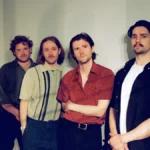
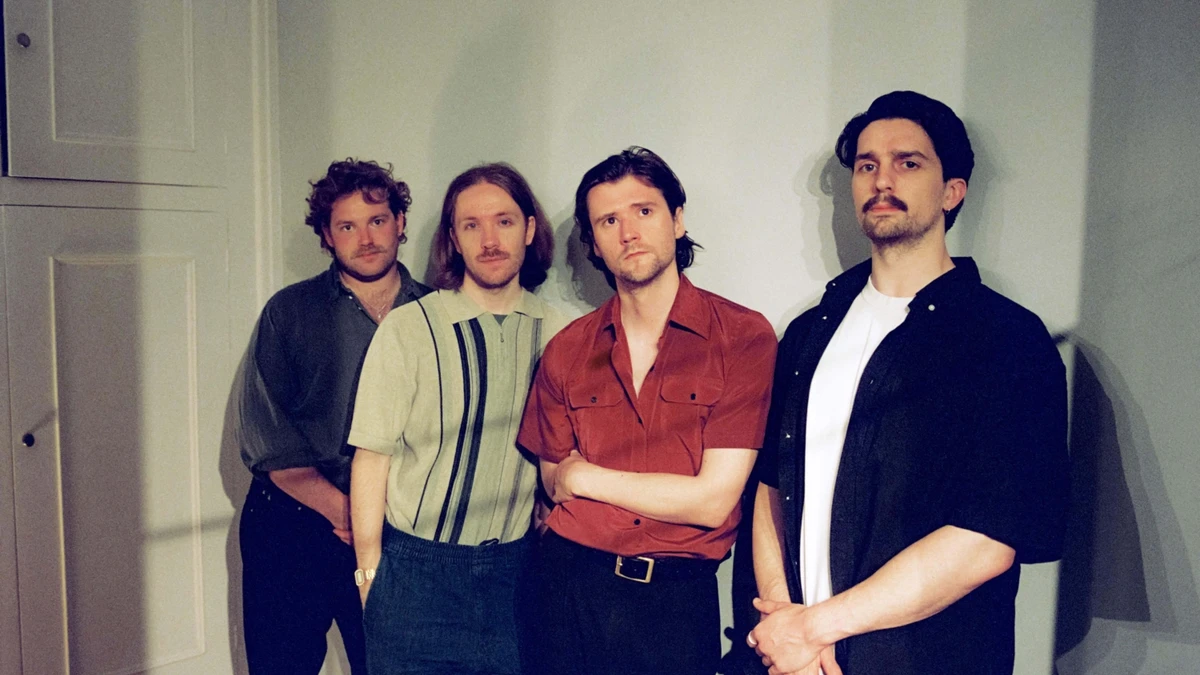
Do Nothing made their second album in one Nottingham room, JT Soar, with Louis Milburn of Folly Group producing, three years after their debut Snake Sideways. What came out of that room is Friend World, 11 songs in 44 minutes, released on 6 November through Submarine Cat Records. Its title comes from an unlikely place: the song the comedian Andy Kaufman often used to end his shows with.
The record has landed well. DIY and Dork both gave it four stars, and Platform called it “sprawling, stunning and epic”. It is also, by the band’s own account, a record about bleak things that does not feel bleak, which is a harder trick than it looks.
Where the Friend World Title Came From
Singer Chris Bailey explained the name when the album was announced. “Kaufman often used to end his shows singing a song called ‘This Friendly World’, by a guy called Fabian,” he said, as reported by twnty three. Song Bar’s Peter Kimpton filled in the rest of the story: the song is Fabian’s 1959 recording, which Bailey found in a Kaufman documentary and whose sunny optimism struck him as almost sinister. He pitch-shifted the original for an early Do Nothing song called Friend World that did not make the album, but the name stayed. It now sits over a set of songs about people who are mostly alone, which is the joke and the point at the same time.
Kaufman was one of several sources Bailey drew on. The same introduction lists an online cartoonist, the novelist Elizabeth Smart and the comedian among his reference points. Bailey is clear that the subject matter is heavy but the mood is not. “For me it’s an album about a lot of bleak things, but it doesn’t feel bleak,” he said.
That balance runs through the reviews. Dork’s Felicity Newton heard Bailey pairing hopelessness with humour across the record, and the album leans into that tension rather than resolving it.
The Room and the Producer Behind Do Nothing’s Second Album
The recording details are modest. According to DIY’s review, the album was made at JT Soar in Nottingham, the band’s home city. Milburn, who plays in the band Folly Group, produced it, according to twnty three, and Song Bar credits him with the mix as well. The line-up behind Bailey includes guitarist Kasper Sandstrøm. What changed between albums is the palette.
Cockrell described the result as “part post-punk oddity, part character study, and part wonderfully strange fever dream”, with “restless rhythms, sharp-edged guitars and unexpected electronic touches”. Platform’s Josh Turner picked out “interesting sonic textures” and singled out the synth production on These People Want Blood. Dork’s Felicity Newton heard a band that sounds “freer, looser and clearly having fun”.
That is the useful measure of a second album made on a modest scale. Do Nothing did not buy a bigger sound; they widened the one they had, adding synths and electronic colour to a guitar band’s frame.
Friend World, Track by Track
The album runs to 11 tracks in this order: Misery, The Nail, Act Natural, These People Want Blood, Stars, Smile, Dog 2, Loner, Yes, Paris, Jesus and Incommunicado. Song Bar’s Kimpton went through it song by song, and the other reviewers agreed on several high points.
Misery opens the record. Dork described the opener getting “discordant and messy”, which sets the terms for what follows: this is not a band polishing its edges.
The Nail follows it and, in Kimpton’s words, “turns existential frustration into a kind of sardonic complaint against God”, with Bailey singing of “this perfect life that I don’t really like”.
Act Natural is a song about going through life on autopilot, set to what Song Bar called a “squelchy Clavinet keyboard and elastic bassline” giving “a springy, almost danceable backdrop”.
These People Want Blood is where the new palette is clearest. Platform singled out its synth production as one of the album’s distinctive moments.
Stars moves furthest from the guitars. Song Bar described it as “built around a drum machine pattern and bubbling synths rather than the band’s more familiar guitar attack” and called it “one of the album’s most immediately affecting songs”.
Smile was released ahead of the album. DIY noted that it runs to five minutes, built around Bailey’s repeated declaration of “how good it is to be alone at last”, while Dork called it “genuinely funky”. Bailey said the song grew out of an online cartoonist who had schizophrenia. “He was obsessed with this puzzle book that was basically unsolvable, and made a sprawling, poorly drawn comic,” he told twnty three.
Dog 2 gives Bailey room to stretch. Platform praised his “awe-inspiring rising vocals” on the track.
Loner is the stripped-back moment, giving the album what Platform called “breathing room”. Dork described its “Wah wah wah” backing vocals as “spectacularly on-the-nose”, which suits a song with that title.
Yes “gradually builds into one of its most exhilarating moments”, Song Bar wrote, gathering momentum through “increasingly intricate rhythms and handclaps”. Paris, Jesus is another change of pace, its “accumulating claps and buoyant guitar-pop feel” giving it “a bright, almost effortless lift”.
Incommunicado closes the album, and Platform’s Turner called it “perhaps the best song on the record”. Ending on a title that means being out of contact is the album’s last dry joke about the friendly world of its name.
Characters Instead of Confessions
The writing is the other change. Rather than singing straight from his own life, Bailey, according to DIY, “steps into the shoes of an assortment of peculiar characters, finding humour, sadness and humanity in their stories”. Dork read the album as a study of people stuck in ruts, people confused about who they are and people repeating the same mistakes.
The lines reviewers quoted show how that works. Newton picked out a couplet about opening all the cages and being “eaten straight away” as “funny and brilliantly self-defeating”. Platform’s Turner heard a “pseudo-Morrissey flair” in Bailey’s phrasing, the kind of arch phrasing that lets a grim line land as a punchline.
The effect is a record that treats its misfits with affection. Cockrell summed it up as “strange, thoughtful and frequently hilarious”, and as a record that “finds plenty of meaning in life’s misfits and oddities”. That places Do Nothing in a long post-punk habit of looking at life from the outside and finding the jokes in it.
What the Critics Heard in Do Nothing
The scores line up. DIY gave Friend World four stars. Dork’s review, published on 20 November, also gave it four stars and ended on the image of a band having fun while Bailey “continues to find being alive profoundly inconvenient”.
Platform was the most expansive. Turner called the album “sprawling, stunning and epic” while acknowledging it was not “reinventing the wheel”, and concluded that it shows Do Nothing “exploring exactly where their sound can go”. That last phrase is the clearest summary of the record: a band using a second album to test the limits of its sound rather than to repeat the first.
Platform did not treat Friend World as a reinvention, and that is part of its appeal. It sounds like the same band with more room in the arrangements and more confidence in the writing.
How Do Nothing Got Here
The Nottingham four-piece arrived with Snake Sideways in 2023 and spent the years since building a live following. According to twnty three, they have toured the UK and Europe as support to Everything Everything, played European festivals and appeared at SXSW, the music conference in Austin, Texas.
That road time shows in the record’s looseness. Dork’s “freer, looser” reads like a description of a band that has learned to trust its instincts on stage, and Friend World keeps some of that live energy without sounding like a live album.
For a band on an independent label, the economics of a second record matter as much as the songs, and we have looked at the same pressure from another angle in what a label-free budget does to a record. Do Nothing’s answer was one room, one producer and 11 songs that find the comedy in being alone. On the evidence of the reviews, it was the right call.
About The Author