
What Claps, Snaps and a Guitar Do to Lawrence Timoni's Cheap Glass Halo
A Berlin Producer Builds an Art-Pop Single on Rumba Catalana Guitar and Fretless Bass
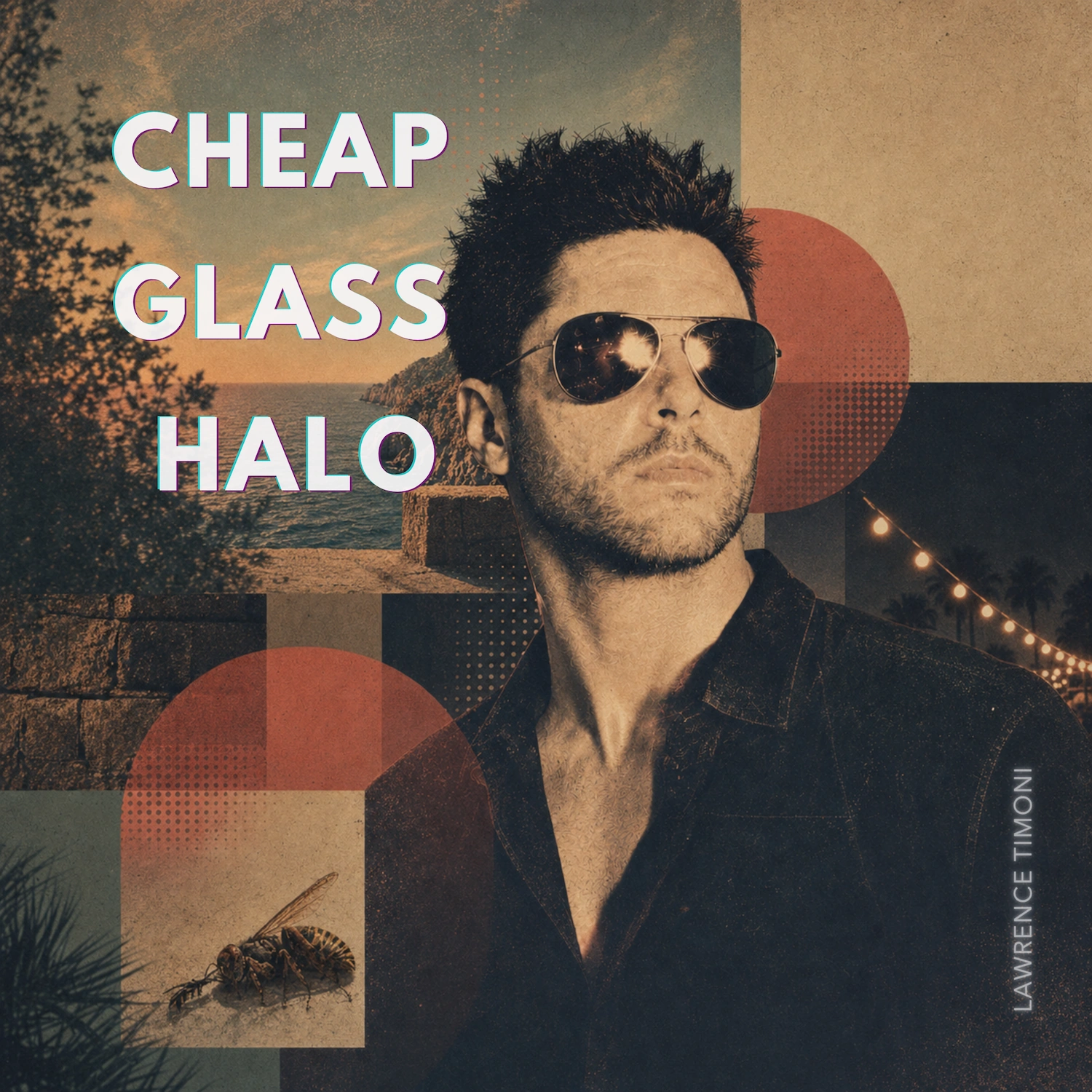
Cheap Glass Halo started with claps, snaps and a guitar. That is how Lawrence Timoni describes the song on his own site. The finished single never strays far from that small starting kit. The Berlin-based musician and producer released it on 11 September 2026. It runs four minutes and twenty-eight seconds, and a percussive acoustic guitar pulse taken from rumba catalana drives its art-pop arrangement.
Lawrence Timoni’s Cheap Glass Halo is in the playlist below, with the indie records this desk has picked, and Timoni’s artist profile collects the rest of the coverage. It reached this desk through PopHits.Co Music Charts, which verifies independent artists and places their releases across its network of music news titles. Press play on it, then read on for how the song was put together.

The Rumba Catalana Guitar Pulse, Finger Taps and Handclaps That Drive Cheap Glass Halo
Rumba catalana grew up in the Gitano neighbourhoods of Barcelona in the 1950s and 1960s. Peret became its best-known populariser. Its central habit is simple: the guitar does two jobs at once. Players combine the strum with percussive slaps on the instrument, a technique known as the ventilador.
Cheap Glass Halo moves that habit into art-pop. The acoustic guitar pulse sets the pace. Meanwhile, finger taps and handclaps sit on top of it as the percussion. As a result, the rest of the arrangement has to fit around a rhythm one pair of hands can carry.
Two further layers fill the space. First, a fretless bass moves underneath, fluid rather than locked to the beat. Then the chords shift through jazz changes instead of settling into a loop. A fretless neck lets a player glide between notes rather than step between them. Here, that glide softens the edges of the guitar’s attack.
Reviewers heard the same build. No Transmission described percussion struck directly on the acoustic guitar, with vibes and bass gradually filling the space around it.

Sticky Tables, Harsh Light and a Summer Night That Never Quite Settles Down
The lyric is where the unease comes in. Timoni keeps the vocal close and understated. Meanwhile, the words describe a humid summer night through small, physical details: sticky tables, harsh artificial light, nervous gestures.
None of those details is dramatic on its own. However, that is the reason to choose them. Heat, bad light and restless hands are enough to set a scene. So the level delivery lets them work without underlining anything.
Buzzy Band found more of the same room. Its review describes an overheated space after midnight, a clicking fan and a dying wasp beside a glass. The title belongs to that world too. A halo suggests grace. One made of cheap glass suggests something that only looks the part under the right light.


An Inviting Groove and a Tension That Never Resolves Shape the Structure of Cheap Glass Halo
The craft of the song sits in that contrast. The rhythm is built to pull a listener in. The lyric, however, holds back the resolution the rhythm seems to promise. At almost four and a half minutes, the track is long enough for that imbalance to register.
The harmony does a lot of the work. Because the chords keep shifting, the groove never hardens into a simple loop. The song keeps a slight lean forward from start to finish. That is a songwriting decision as much as a production one.
Those parts also explain the three comparisons the single invites. Thundercat built records such as Drunk (2017) with the bass as a lead voice. That is the closest reference for the way Timoni’s bass line moves. alt-J made percussion the hook on Breezeblocks, from their Mercury Prize-winning debut An Awesome Wave. Finally, Tame Impala began as Kevin Parker writing, playing and producing largely on his own. Likewise, Timoni wrote and produced Cheap Glass Halo himself in Berlin.
The single also begins somewhere smaller than much of his catalogue. His site describes a signature built on fuzzy guitars, strings and electronic detail. You can hear it on Brighter Still, Life’s a Mess (But We Love It), Where the Wind Knows Me and Velvet Bite. Earlier releases found readers too. The Big Takeover reviewed the acoustic version of Good Enough (Still I Try), and Hella Fuzz covered Where the Wind Knows Me.
The single is for listeners of alt-J, Tame Impala and Thundercat. In particular, it suits those who come to a record for an unusual groove and a melodic bass line. It also suits anyone who keeps an ear out for rhythm-led songwriting from independent artists in Berlin.
From the BestRock.News curator team: “Cheap Glass Halo hands the rhythm to the acoustic guitar. That frees the fretless bass to move between the chords instead of marking time. It is a small arrangement choice, and it decides how the whole song feels.”
Where to Hear Cheap Glass Halo and Follow Lawrence Timoni From Berlin
Cheap Glass Halo is out now on Spotify, embedded near the top of this page, and on Apple Music. His official Spotify playlist gathers the earlier singles too, including In Every Quiet Moment.
Follow Lawrence Timoni across platforms: Spotify, Apple Music, SoundCloud, YouTube channel, Linktree, Instagram, TikTok and Facebook. The official site carries his press notes and contact details.











About The Author