Polyphia performing live.
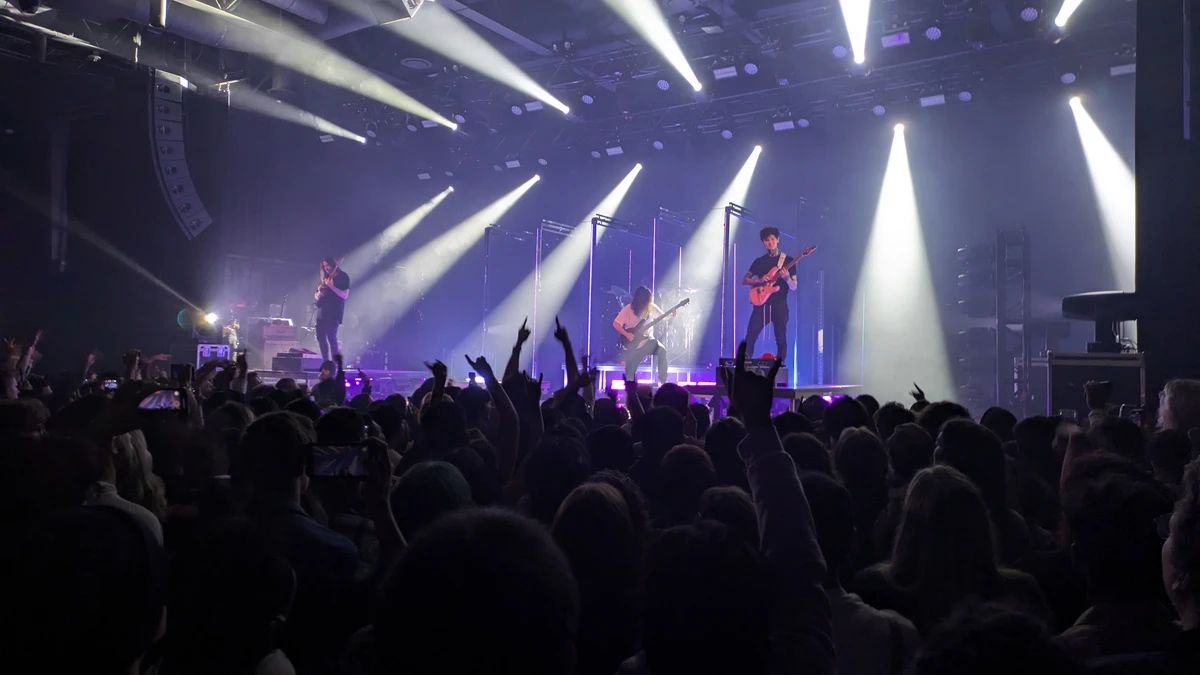
Polyphia performing live.
Polyphia announced a new album and moved their North American tour into next year in the same week.
The record arrives in October. The shows now start in February.
Moving a Tour to Make Room for a Record
Postponing a run of that size is expensive and disruptive, and it is usually done for a reason.
The most likely one here is straightforward sequencing. Touring an album that has been out for a fortnight means playing new material to an audience that has not learned it yet, which is the worst possible timing for a band whose songs are this intricate.
Waiting until February gives the record three months to settle, which for instrumental music that requires several listens is a considerable difference.
It also costs the band a live income cycle, which is the clearest evidence that the decision was about the music rather than the calendar.
An Album in October, a Tour in February
The gap between release and tour is now roughly three and a half months.
That used to be the standard interval and has largely disappeared, because streaming rewards releasing and touring simultaneously to capture a short attention window.
Reverting to the older pattern is a bet that this audience behaves differently, learning a record properly before turning up rather than encountering it live.
Eight Strings and Rave Riffs
The new material is built on eight-string guitars and on riffs derived from electronic dance music.
An eight-string adds two low strings below the standard range, extending downward into territory normally occupied by a bass, which changes what a riff can do.
Pairing that with dance-derived rhythmic figures produces something genuinely unusual: heavy in the metal sense and repetitive in the electronic sense, which are not natural companions.
Singing the Part Before Playing It
The band’s guitarist has described writing by singing lines out loud and then translating them onto the instrument.
That is a notable method and it is not unique to him. At least one other prominent guitarist in this genre works the same way, which suggests something about how instrumental music with real melodies gets written.
The advantage is that a sung line is limited by what a human voice can do, which is a considerably better filter for melody than what a hand can reach.
An Instrumental Band With a Large Audience
The band play to full rooms with no vocalist, which remains rare at this scale.
The usual assumption is that instrumental music has a hard commercial ceiling, and for most of recorded history it did.
What changed is video. A guitarist doing something visibly difficult is compelling to watch in a way that a recording is not, and an audience that arrives through video is already accustomed to music with no words in it.
Technique as the Selling Point
The playing is extremely difficult, and the band have never pretended otherwise.
That is a risky position. Music organised around virtuosity has a long history of impressing musicians and boring everybody else, and the genre is full of examples.
What keeps this band on the right side of it is that the difficult passages are usually also the hooks, so a listener who cannot play a note still has something to remember.
Borrowing From Outside Rock
The catalogue draws heavily on rhythms and production from hip-hop and electronic music rather than from rock.
That is the most commercially significant thing about them. A guitar band whose rhythmic vocabulary comes from contemporary popular music reaches listeners who have no interest in rock at all.
It also annoys a proportion of the traditional guitar audience, which is generally a sign that something is working.
Written Across Three Cities
The record was assembled over two years in Miami, Los Angeles and Dallas.
Writing across multiple cities and an extended period produces a specific kind of album: layered, revised and considerably more constructed than one made in a single booked session.
The band have described going deep rather than wide, which is what that process tends to produce, and also what makes a record that requires repeated listening.
A Heavier Direction
Both singles have been described as heavier than anything the band has previously released.
Going heavier is one of the few available moves for a band whose reputation is built on technical precision, since the alternative directions are quieter or more conventional and neither suits them.
It also aligns with where their audience overlaps most, which is with metal and progressive listeners rather than with the indie or math-rock scenes they are frequently filed alongside.
Filming in a Baroque Church
The second single’s video was shot in Rio de Janeiro against gold-leaf Baroque interiors.
That is an expensive and specific visual choice for an instrumental band, and it does something a performance video cannot.
Ornate religious architecture against extremely modern music produces a contrast that carries the album’s title without anybody having to explain it.
Why This Genre Now Has an Audience
Instrumental guitar music has gone from a specialist interest to something that fills theatres, and the reasons are worth being precise about.
Video platforms did most of it. Guitar playing is a visual skill, and short-form video is unusually good at conveying difficulty, so a player with a distinctive technique can reach millions of people who would never have heard the music on radio.
There is also a generational factor. A large audience now discovers music without any expectation of lyrics, having grown up with instrumental soundtracks, game music and production-led genres. For those listeners, a band without a singer is not missing anything.
What that produces is the situation visible in any photograph of one of these shows: a full room, a lot of phones, and nobody singing along because there is nothing to sing.
What Delaying a Tour Actually Costs
Pushing twenty-eight dates back by six months is not a neutral scheduling change.
Tickets sold for the original dates have to be honoured or refunded, and a proportion of buyers will not be free on the new date. Venues have to be rebooked into an already-full calendar, and support acts committed to the original run may not be available for the second.
There is also the crew. A tour that moves releases everybody who had blocked out those months, and they take other work, which means rebuilding a team closer to the date.
Bands do it anyway when the alternative is worse. Playing a new album to an audience that has not absorbed it produces a flat tour, poor reviews and a record that never quite catches, and that is a considerably more expensive outcome than a rescheduling fee.
Why an Eight-String Changes the Writing
Extending the range downward sounds like a small technical adjustment and it reshapes how a band writes.
The two additional low strings occupy the register a bass guitar normally holds, which immediately raises the question of what the bassist is now doing. The usual answers are to move the bass up into melodic territory, to double the guitar for weight, or to write parts that deliberately avoid the overlap.
There is also a compositional consequence that guitarists discover quickly. A low string played fast turns to mud, because the frequencies are long and they smear into each other, so the writing has to slow down or thin out in exactly the register it just gained.
Bands who use these instruments well treat the extra range as a colour rather than as more of the same. Bands who do not simply play their existing riffs lower and wonder why the record sounds heavy and indistinct.
What Is Actually Being Tested
Two things. Whether an audience assembled largely through video turns out for twenty-eight theatre dates six months after they were first sold.
And whether a band whose reputation rests on precision can go heavier without losing what made the precision interesting.
Five albums, eight strings, twenty-eight dates, and a record arriving four months before the tour that supports it.
About The Author