
Trenic and the Cost of a Riff You Cannot Play Yet
A Budapest Duo Wrote an Intro Beyond Their Hands, Then Practised Until It Was Not
The constraint on the sky always looks the same from my window was a guitar part. Its own writer could not play it. Trenic built the intro around Tim Henson’s picking technique, which is difficult on purpose, and then had to earn it. They recorded the track at home in Budapest and released it on 21 August 2024. Everything else on it follows from that decision to start with something out of reach.
Trenic are in the playlist below. the sky always looks the same from my window came to this desk through PopHits.Co Music Charts, which verifies independent artists and places their releases across its network of music news titles. Their coverage sits on the Trenic profile. Play it once, then read on.

The Riff Trenic Could Not Play Yet
Trenic told Punk Head exactly how it went: “The intro guitar theme was inspired by Tim Henson’s picking technique, which is quite difficult. I had to practice a lot before I could finally play it without mistakes, but when I did it was a euphoric feeling.”
That is a small admission with a large consequence. A duo working to a home-studio budget has every incentive to write within its hands. Every retake costs time nobody is being paid for. Choosing a part that needs weeks of practice before anyone can track it is a deliberate expense. It sets the standard for the rest of the record.
It also does something specific musically. A picked, interlocking figure of that kind sets up a pattern the ear expects to continue. That is exactly the right opening for a song about things that do not change.

The Window The Lyric Opens Onto
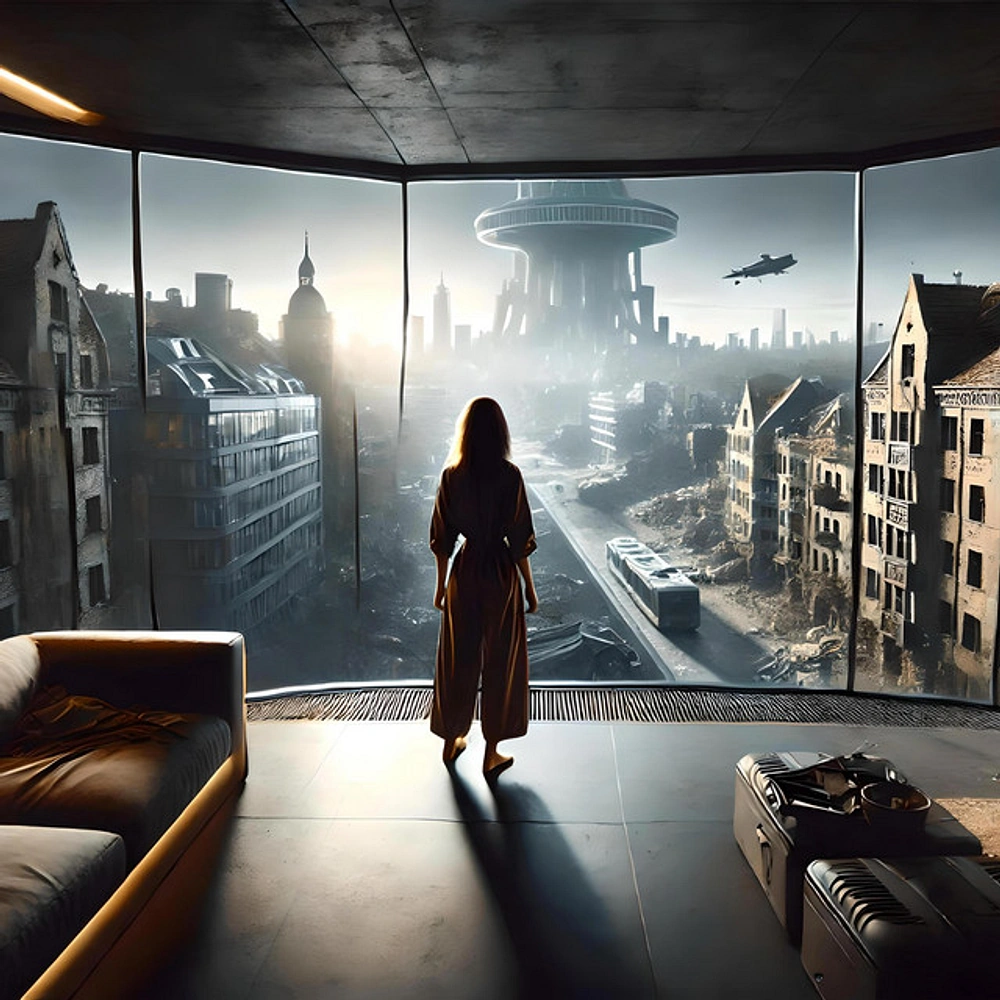
The idea came from an image rather than a feeling. A woman looks out of a window at the same shattered part of the city. It is dark, and nothing has changed, including the sky. The title is the whole thesis, and the song does not argue with it.
Kiss-Matulay Eva sings it without pushing. Kiss Balazs keeps the production underneath her rather than around her. That leaves the flat, unresolved quality of the observation intact, which a bigger arrangement would have smoothed away.
The wider frame is bleaker than the surface suggests. Trenic write about problems with no good answer, naming climate as their example. This song is the small domestic version of that. The view from the window will be the same tomorrow, and knowing it changes nothing.


The Join Was The Hard Part
The band name the join, not the writing, as the difficulty. Connecting the different musical parts into something coherent was the challenge. That is the honest answer for this track. It moves from a picked intro through an atmospheric middle to a resolved ending, with no chorus doing the heavy lifting.
The seams are audible if you listen for them, and they hold. Writing for Beach House Magazine, Hayden Frear pointed at the same thing from the outside. Subtle electronic elements combined with the home-studio sound to make the track stand apart. Little Garden noted that they recorded it entirely in their own room. That is the constraint the whole arrangement is built around.
Two years on, the track keeps picking up coverage rather than fading. That is the ordinary reward for building something that does not date.
Trenic Built The World Before The Catalogue
What lifts this above a well-made single is the frame around it. Every Trenic song takes place in the same post-apocalyptic universe. An unknown race, the Trenic of the name, landed on Earth and gifted humanity technology. What began well ended badly. The band continue the story as a comic on their own site. At the time of this song they were four tracks into it. They built the world before they built the catalogue.
That order of operations is the interesting part. Most independent bands write songs and find a theme afterwards. Committing to a universe first is a constraint you keep paying for. Every later song has to fit a story you have already told.
Coheed and Cambria are the obvious precedent. They spent a whole catalogue inside one science-fiction narrative, with the comics to match. Trenic are nowhere near that scale. Polyphia are the technical reference the band supplied themselves, and the reason the intro sounds like work. Daughter are the mood. Guitar works as atmosphere rather than drive, and the vocal stays quiet while the song gets heavier underneath.
The catalogue has grown since, and Tape Ranger added White train to the desert to its Indie POP! playlist. You can hear the sky always looks the same from my window on Spotify. Trenic post on Instagram and TikTok. They keep videos on their YouTube channel, upload to SoundCloud, and run the comic on their own site.









About The Author