

Allee Der Diktatoren and the Cost of Leaving the Compressor Off
What Four Berlin Musicians Gave up to Get This Guitar Sound
The four men in Allee der Diktatoren know exactly how to make a loud, tidy rock record. Between them they have signed to Warner and BMG, passed through the Popakademie Mannheim band pool, and worked with producers who made records for Nena, Wir sind Helden and Extrabreit. On Architektur des Scheiterns, released on 9 November 2024, they declined to use almost any of it.
Allee der Diktatoren appear in the playlist below, and everything filed on them so far is indexed on the group’s artist profile. Architektur des Scheiterns was certified by PopHits.Co Music Charts, an editorial programme that verifies independent artists and places their releases across its network of music news titles. Give it a spin while you read the rest.


The Lyric Allee der Diktatoren Wrote About Conflict
The title translates as architecture of failure, and the song takes that literally. It is not about a relationship going wrong or a scene collapsing. It is about the idea that people are built to disagree, that the failure is structural rather than accidental.
Writing about the single for Plastic Magazine, Alex Stone read the theme as humanity’s struggle to coexist harmoniously, with conflict hardwired into our genetic makeup. That is a colder position than most punk lyrics take. Anger usually has a target. Here the target is the arrangement of things.
Mike Gutsche sings it without pleading. The vocal sits forward and level. The band behind him never swells to underline a line. MUSIK GALAXIE described the verses as carrying a poetic urgency delivered with a passion that lands as catharsis, and noted that the staging is deliberately coarse. Coarse is the correct word. They smooth nothing over. Smoothing it over would argue against the lyric.
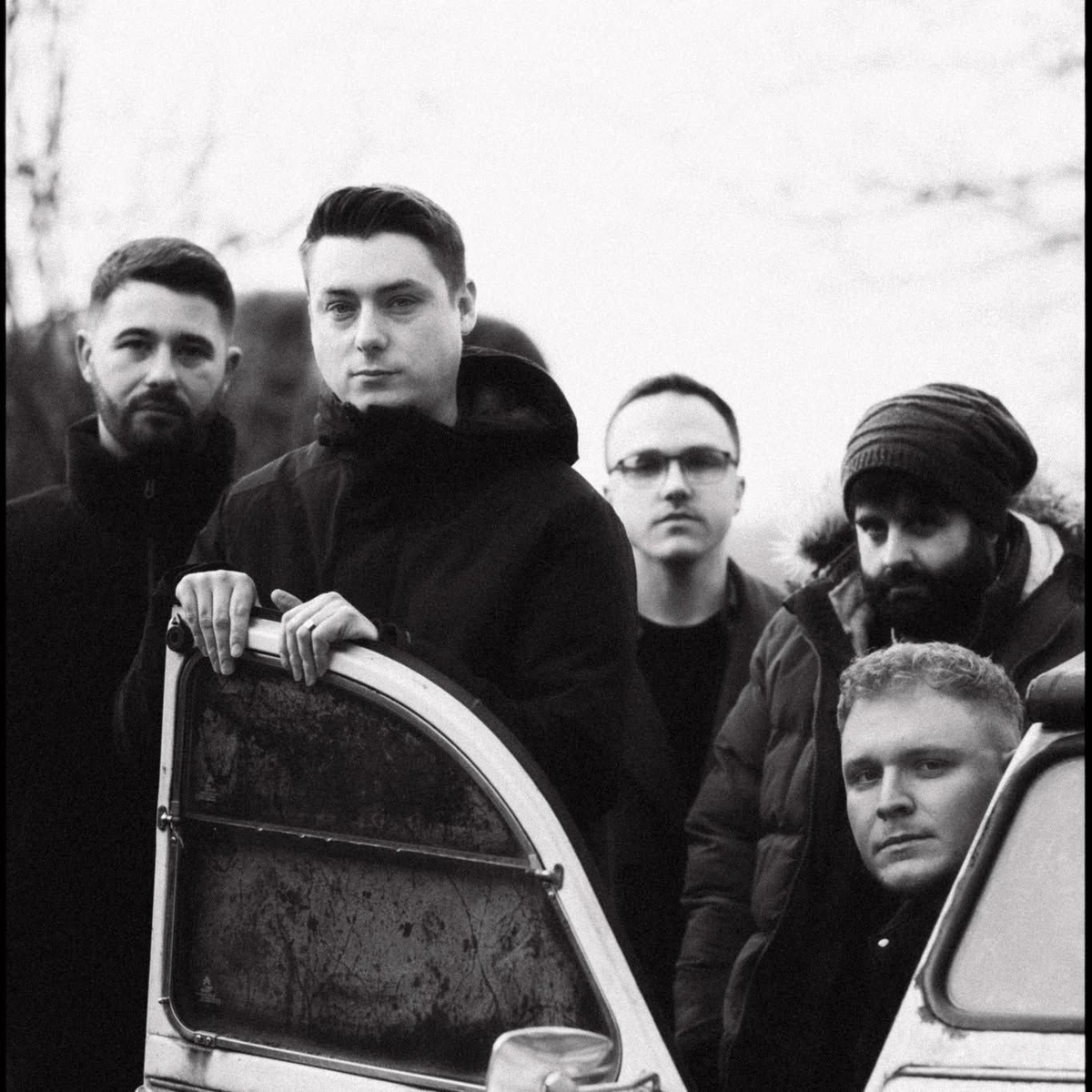
The band’s own description of what they do is blunter: richtig schön reudig, which lands in English somewhere near properly, beautifully mangy. They have earned the right to say it. The line-up is Marcus Thiele on drums, Stephan Patschicke on guitar, Max Kästner on bass and Gutsche on vocals and guitar, and they played their first show in 2016 at the Alte Försterei before supporting Extrabreit and Vom Ritchie.

The Structure: What Recording Everything At Once Does To A Song
Here is the decision the record is built on. The band used to track one instrument after another, the normal way. For this run of sessions they stopped.
“We switched from recording one instrument after the other to playing all together and recording the whole band in one take in a old fashioned analog studio,” the band told Plastic Magazine. “That creates more energy and room for the universe to pour its magic into it.”
The room was Studio Wong, a vintage analogue studio in Berlin. Their booking agency is direct about the other half of the choice: they deliberately avoid fat, over-compressed guitars in favour of analogue sound design, so the compositions keep a natural, open and wild energy. Same amps as before, in the band’s words, but with much more dirt in the rhythm sounds.
That costs something real. Recording live means no fixing a bad take in isolation, no comping a vocal across twenty passes, no leaning on a limiter to make the chorus feel bigger than it played. The band has to be good in the room on the day. Whatever they want from the dynamics, they build with arrangement rather than gain.

Where The Money Went Instead
The track runs two minutes and forty-nine seconds and it moves in clear blocks: guitar crunch and drums to open, thick fuzzed guitars under the verse, cymbals and a busier bass lifting the chorus, then a drop to clean twanging guitar before the distortion returns. Nothing sits compressed flat, so the drop reads as genuinely quiet and the return reads as genuinely loud. On a heavily limited mix the same arrangement would be a single flat wall, which is the version of this song you have already heard from other bands.
The reference points are the ones the band names themselves: The Stooges, MC5, Ramones and The Clash. They are clear that the debt is not stylistic. What they take is the approach, expressing something without arranging it around what is expected of them. That places the record in this site’s alternative rock territory rather than in nostalgia.
The BestRock.News curator team: “Bands with major-label experience usually keep the polish, because it is the part that was expensive to learn. This lot dropped it on purpose and kept the parts you cannot buy: four players who can hold a take, and an arrangement built so the loud sections need no help. That is a harder record to make than a compressed one, and it is why the quiet bar before the last chorus lands.”
Architektur des Scheiterns was the second single from those 2024 sessions, following jeden Tag ist Krieg in September, and it went out days before the studio block that finished the band’s second album. Their self-produced debut, dieses kleine bisschen Wut, arrived in 2022.
Where To Hear Allee der Diktatoren
Stream Architektur des Scheiterns on Spotify, buy it from Bandcamp, and hear more on SoundCloud.
Follow Allee der Diktatoren across platforms: Instagram, Facebook, TikTok, and their YouTube channel.











About The Author