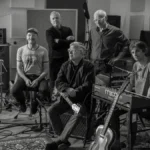
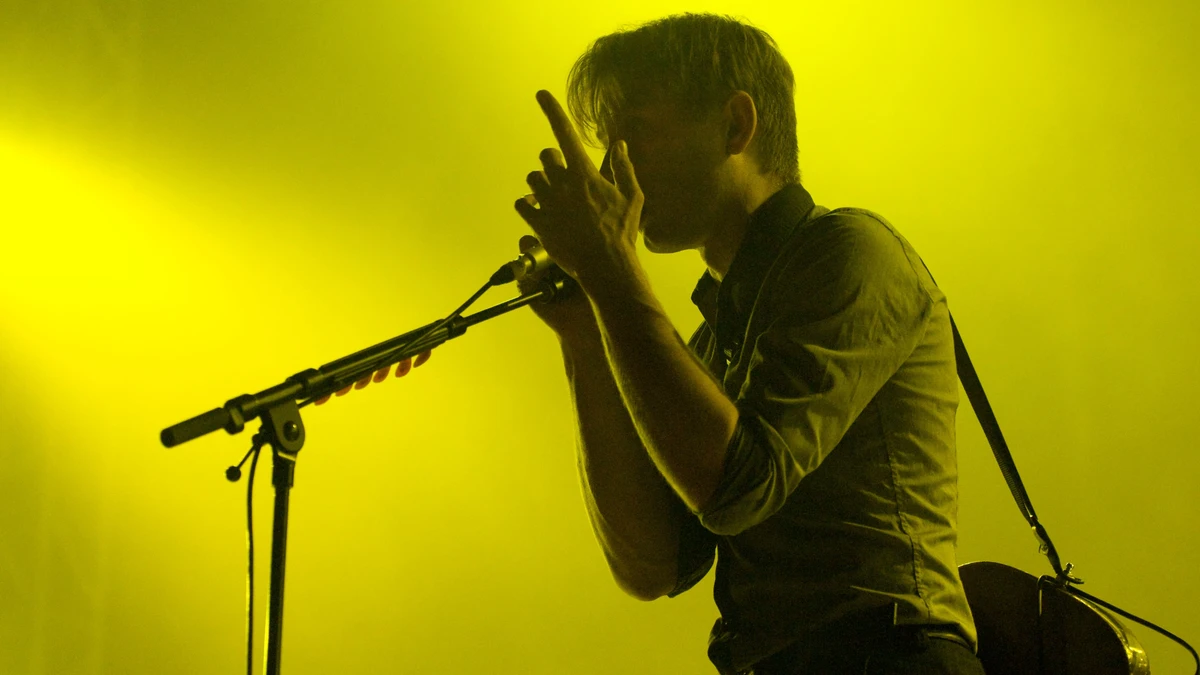
Franz Ferdinand performing live.
Franz Ferdinand performing live.
Franz Ferdinand spent August playing nine American cities under a name borrowed from local government.
The Greater Glasgow European Cultural Exchange Tour is a joke, and it is also fairly precise.
A Tour Named Like a Council Initiative
The title reads exactly like a twinning programme, the kind of scheme in which two cities exchange delegations and produce a report nobody reads.
Naming a rock tour that way is a specific type of humour: dry, bureaucratic and delivered completely straight, which has been this band’s register since the beginning.
It also does something useful. A tour with a name is an event rather than a series of dates, and a name this odd gets repeated, which is free promotion for a nine-city run.
The literal meaning is not entirely wrong either. Five people from one Scottish city are, in fact, visiting nine American ones.
Nine Cities, Including the Unfashionable Ones
The routing takes in Buffalo, Albany, New Haven, Huntington and Charlotte alongside Boston, Atlanta, Austin and Dallas.
That is a deliberately unglamorous list. A band of this stature could play three or four major markets and reach a similar number of people with a fraction of the driving.
Going to the secondary cities instead is how a band keeps an audience in places that are visited once a decade, and those rooms are frequently the better shows.
Glasgow as an Identity
The band have been identified with their city since the beginning, and it has been more than a biographical detail.
Glasgow has produced a remarkable number of significant guitar bands relative to its size, across several decades and several genres, with a scene organised around art schools and a small number of venues.
Naming a tour after the city is a way of pointing at that lineage without having to explain it.
A Sixth Album in Twenty Years
The record being toured came out at the start of 2025 and is the band’s sixth.
Six albums across two decades is a deliberate pace rather than a slow one. It reflects a band that tours each record properly and does not release simply to stay visible.
The gap before the previous album was similarly long, which suggests a working rhythm rather than a series of delays.
Guitars Playing Rhythm Instead of Riffs
The band’s defining musical idea was making guitar music that worked rhythmically rather than through volume.
The parts are short, clipped and syncopated, functioning more like percussion than like traditional rock guitar, with the bass carrying the melody underneath.
That approach came out of post-punk and disco rather than out of rock, and it is why the songs have always worked on a dance floor as well as in a venue.
Angular Rather Than Heavy
The guitar tone is thin, bright and cutting rather than thick, which is the opposite of most alternative rock production.
Thin guitars leave space for the rhythm section, which is essential when the point of the arrangement is that people move to it.
It also ages well. Records built on thick distortion date to their production era very quickly, while records built on rhythm and arrangement tend not to.
An Enormous First Single
The band’s first widely known song remains one of the most recognisable guitar singles of the 2000s.
Having a song that large early is a permanent advantage and a permanent problem. It guarantees an audience for twenty years and it guarantees that every set has to include it.
The bands who handle it well treat it as a reliable asset rather than a burden, which is generally visible in whether they play it early or save it for the end.
A Long-Running Independent Label
All of the band’s records have come out through the same British independent, which is unusual for an act that reached this level of success.
That label has become one of the most significant independents in Britain, with a roster spanning several decades and genres, and it has kept artists that a major would have dropped after one underperforming record.
For a band six albums in with a long gap between releases, that continuity is worth more than a larger advance.
A Lineup That Has Changed
The current five-piece includes members who were not present on the early records.
Bands that survive twenty years almost always do so with some turnover, and the ones that manage it well tend to keep the songwriting core intact while the supporting positions change.
Adding a keyboard player also changes the arrangements, which is one route out of the trap of sounding exactly like your first album forever.
A Short Run Rather Than a Long One
Nine dates across two weeks is a compact tour by any measure.
Short runs are increasingly common for established bands, because they concentrate demand and keep costs predictable, and because members have lives that do not accommodate three months away.
It also means every date is likely to sell, which is a better outcome than thirty dates with several half-full rooms.
Why Naming a Tour Still Works
Tour names have become close to universal and it is worth asking what they are for.
A named tour is easier to search for, easier to write about and easier to merchandise, since a name can be printed on a shirt in a way that a list of dates cannot. It also gives an audience a way to refer to a period of a band’s history afterwards.
What separates a good name from a forgettable one is specificity. Most tours are named after the album, which conveys nothing. A name that is genuinely funny, or that tells you something about the band’s sense of itself, does work that a promotional budget otherwise has to do.
A joke about a municipal cultural exchange programme achieves that at zero cost, which is the whole point.
The Problem With Being an Immediate Success
A band whose first album arrives fully formed and sells enormously faces a specific long-term difficulty.
There is no development period visible to the audience. The band appears complete, which means every subsequent record is measured against a debut that had years of unpressured work behind it and no expectations attached.
It also fixes the band’s identity very early. Twenty years later, a substantial share of any audience is there for a sound established in the first eighteen months, and departing from it costs listeners while repeating it costs credibility.
The route through is the one this band has taken: keep the rhythmic idea that defined the group, change everything around it, and release slowly enough that each record is treated as an event rather than as a comparison.
What America Costs a British Band
Touring the United States remains the hardest thing a British guitar band does, and the arithmetic is worth stating.
The distances are the first problem. Nine American cities across two weeks involves more driving than a twenty-date European run, because the gaps between markets are measured in hundreds of miles rather than dozens. That means a bus, a driver and a crew who sleep on it.
Work visas are the second, and they are expensive, slow and required for every person travelling. A band that would clear a modest profit on a European run can lose money on an American one before a single ticket is sold.
What makes it worth doing anyway is that the American audience does not maintain itself. A band that stops visiting is forgotten within a cycle or two, and the cost of rebuilding is considerably higher than the cost of returning every few years.
That is the real reason for a routing that includes Buffalo, Albany and New Haven rather than three coastal cities. It is maintenance rather than expansion, and it is why bands with twenty-year careers keep making the trip.
What Is Actually Being Tested
Two things. Whether a nine-date run through mostly secondary cities is a better use of an American summer than four dates in the obvious ones.
And whether a band twenty years past its first single can keep the audience it earned then interested in the sixth album.
Nine cities, six albums, one label, and a tour named after a council programme.
About The Author