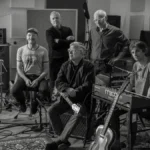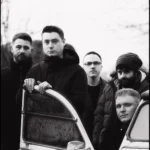

Lebanon Hanover performing at Wave-Gotik-Treffen.
Lebanon Hanover performing at Wave-Gotik-Treffen.
Lebanon Hanover play eight shows in four countries this September, opening in Guangzhou and finishing in Sydney.
The band exists because two strangers swapped record recommendations on a website.
Seventeen Days, Four Countries
The run covers three Chinese cities, Tokyo, Auckland and three Australian dates, inside a little over two weeks.
That routing is unusual for a duo working in a genre with no radio presence and no mainstream press coverage, and it says something specific about where their audience is.
Touring that far requires either strong local promoters or an act willing to take the risk itself, and neither happens without evidence that the tickets will sell.
It also means the entire operation has to be portable, which for a two-person band with synthesisers and a bass is considerably easier than for a five-piece with a backline.
Playing China as a Darkwave Band
Three Chinese dates in a row is the most notable part of the itinerary.
China has a functioning independent live circuit that Western guitar bands have used increasingly over the last decade, with established venues in the major cities and promoters who work with international acts routinely.
It remains a market most bands at this level never attempt, largely because the logistics look intimidating from outside rather than because the demand is absent.
A Band Formed on a Music Website
The two members met through a music social network, where they traded recommendations of 1980s records.
That is a genuinely modern origin story and a completely logical one. Shared taste in a specific and unfashionable corner of music history is a stronger basis for a band than living in the same town.
One travelled to meet the other in person, and the band formed shortly afterwards, which means the entire project began as a correspondence about old records.
Named After Two Towns They Are Not From
The name comes from two neighbouring towns in New Hampshire, which neither member has any connection to.
Names of that kind are a genre convention. Coldwave and darkwave acts have consistently favoured place names, institutional language and words drained of obvious emotional content.
The effect is deliberate: a name that means nothing in particular sets no expectations, which suits music that withholds rather than declares.
Two Voices, Two Instruments
Both members sing, and the arrangement generally alternates rather than harmonising.
That is a specific structural choice with real consequences. Two contrasting voices in one song produce something closer to a dialogue than a performance, and it gives an arrangement a second axis to move along without adding any instruments.
It also solves a practical problem for a duo, since a single voice across a whole album at this tempo would become monotonous long before the record ended.
Bass, Drum Machine, Synthesiser
The construction underneath is straightforward post-punk architecture rather than anything gothic.
A programmed drum pattern sets an unvarying pulse, the bass carries the melodic movement, and synthesisers fill the harmonic space a second guitarist would otherwise occupy.
What distinguishes the good records in this style from the many mediocre ones is almost always the bass playing, since it is doing the work that a whole band would normally share.
Where the Guitar Sits
Guitar appears as a high, thin, reverberant line rather than as a rhythm instrument.
That approach descends directly from British post-punk around 1980, where guitarists deliberately abandoned the chord-driven role the previous decade had established.
It is also why this music sounds spacious despite being made by two people. Nothing is filling the middle of the frequency range, which leaves the voice and the bass room they would not otherwise have.
Seven Albums on a Greek Independent
The entire catalogue has come out through one small Greek label, which signed them off an early split release.
Fifteen years with a single independent is an unusually stable arrangement, and it is the kind that only survives when both sides are getting what they need.
For a band in a defined genre, a label that understands that genre is worth considerably more than a larger one that does not, because the audience is reached through specialist channels rather than through mass marketing.
A Trilogy and Then a Career
The first three albums were framed as a trilogy, and the third produced a song that became a fixture in clubs.
Club play is the primary distribution mechanism in this scene, and it functions very differently from radio. A DJ playing a track weekly for years reaches a smaller audience far more repeatedly, and it is how songs in this genre become standards.
Completing a trilogy early also gave the band a natural point at which to change, which is a useful structure to have built in advance.
Turned Away at a Border
An early North American tour collapsed when the band were refused entry over visa problems, cancelling the remaining dates.
Touring visas are one of the least discussed and most consequential obstacles in independent music, since the paperwork is expensive, slow and unforgiving of errors.
A band that loses a tour to it absorbs the costs with no income, which at that stage of a career can be existential.
Continuing After a Relationship Ended
The two members were together romantically and separated in 2013, continuing the band from different countries.
Most bands do not survive that, and the ones that do generally do so by becoming more professional rather than less: separate lives, scheduled work, and a clear division of labour.
Working across borders has been the arrangement ever since, which for a two-person band that writes with synthesisers is considerably more practical than it would be for a group that needs a rehearsal room.
What Long-Haul Touring Costs a Small Band
An eight-date run across four countries looks glamorous and is financially precarious in ways worth spelling out.
Flights between continents are the single largest cost and are paid before any tickets are sold. Equipment either travels as expensive freight or is hired locally, which introduces the risk of arriving to find the wrong gear. Visas and work permits are required separately for several of these countries.
What makes it viable is the size of the band. Two people flying and hiring backline is a fraction of the cost of five people and a truck, and it is the reason duos in this genre tour internationally while comparable guitar bands stay regional.
The other factor is merchandise, which is frequently the difference between profit and loss on a run like this and travels in a suitcase.
Why This Genre Travels So Well
Darkwave and coldwave have an unusually even global distribution, and there are structural reasons for it.
The music has almost no reliance on lyrics being understood, which removes the barrier that limits most guitar bands to their own language markets. It is also organised around clubs and festivals rather than radio, and those networks are international by design.
There is a further factor that is easy to overlook. The scene’s audience finds music through the same specialist channels everywhere, which means a band with a reputation in Berlin arrives in Melbourne already known to the few thousand people who will buy tickets.
That is a small audience in each city and a large one in aggregate, and it is exactly the shape that supports a tour like this one.
What Is Actually Being Tested
Two things. Whether a two-person band can sustain a schedule that puts them in four countries in seventeen days and then in Portugal, Switzerland and Poland before the year ends.
And whether a scene assembled largely online holds together in rooms on the other side of the world.
Eight shows, four countries, seven albums, and a band that started as a conversation about records.
About The Author